
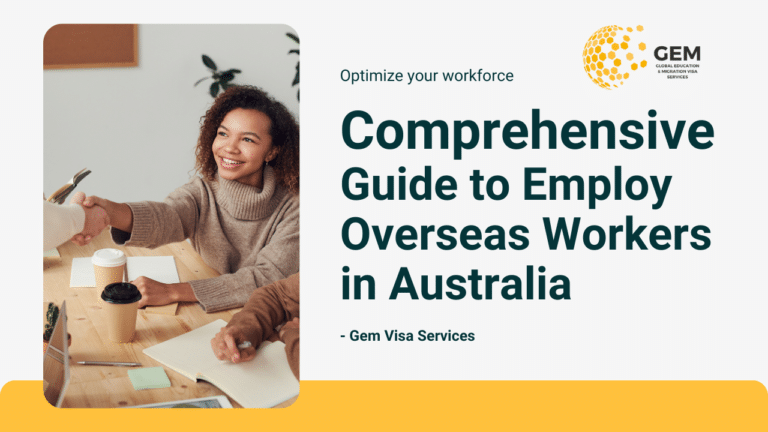
Employing Overseas Workers
Employing overseas workers can be an effective strategy to access global talent and fill skill gaps in Australian businesses. As the global talent market continues to expand, many Australian businesses are turning to overseas workers to fill skill gaps and bring diverse perspectives into their workforce. This guide provides essential steps and considerations for companies planning employing overseas workers, ensuring compliance with Australian immigration regulations and achieving a smooth on-boarding process.
Understanding Visa Sponsorship and Requirements
Employing overseas workers in Australia typically involves sponsoring them for a work visa. Australian businesses can access various visa programs tailored to different employment needs, including temporary and permanent visas. Some common visa types include:
- Temporary Skill Shortage (TSS) Visa (Subclass 482): Allows employers to fill temporary skill shortages with skilled workers from abroad. Valid for up to four years depending on the role.
- Employer Nomination Scheme (ENS) Visa (Subclass 186): Suitable for businesses requiring long-term employees, allowing companies to sponsor workers for permanent residency.
- Regional Sponsored Migration Scheme (RSMS) Visa (Subclass 187): For companies in regional Australia, providing a pathway for workers to achieve permanent residency if they’re willing to live and work in regional areas.

Eligibility and Responsibilities for Employers
Before employing overseas workers, employers must meet specific eligibility requirements set by the Department of Home Affairs:
- Become a Standard Business Sponsor (SBS): Businesses must first be approved as a sponsor, confirming compliance with Australian employment laws.
- Demonstrate Genuine Need and Conduct Labor Market Testing (LMT): Employers need to advertise the position domestically to show a genuine effort to find a local candidate before hiring from overseas.
- Fulfill Employment and Workplace Obligations: Employers are obligated to provide fair work conditions, pay market rates, and adhere to the Fair Work Act, which safeguards all employees in Australia.
- Cover Associated Visa Costs: Employers must bear the cost of associated visa fees, including nomination charges.
Steps to Sponsor an Overseas Worker
- Identify and Assess the Role: Ensure the position is on the Skilled Occupation List since only these roles are eligible for sponsorship.
- Obtain Standard Business Sponsorship Approval: Apply to become an approved sponsor. This process typically takes several weeks, so businesses should plan accordingly.
- Submit a Nomination Application: Once approved, nominate the overseas worker, specifying the position and related details.
- Assist the Employee in Applying for the Visa: The worker can then apply for the appropriate visa. Employers should help with necessary documentation, including the employment contract, to streamline the process.
Key Benefits of Employing Overseas Workers
Hiring from abroad brings several advantages, including:
- Skill Diversification: Access to a global talent pool ensures companies can fill specialized roles, particularly for high-demand skills.
- Cultural Enrichment: Overseas workers contribute to workplace diversity, fostering innovation, inclusivity, and broadening cultural understanding.
- Competitive Edge: Businesses that adapt to global hiring trends often stay competitive, attracting top talent from around the world.
Staying Compliant: Monitoring and Reporting Requirements
Employers have ongoing obligations to ensure compliance with visa and employment conditions:
- Regular Salary and Work Condition Checks: Review employment conditions periodically to confirm alignment with visa requirements and industry standards.
- Notify the Department of Changes: Report any employment status changes, such as role modifications or termination, to avoid visa complications.
- Track Visa Expiry and Renewals: Stay aware of visa expiration dates, and plan for renewals if needed for continued employment.
For more information on compliance and monitoring, consult the Department of Home Affairs’ compliance resources.
Conclusion
Employing overseas workers can be an effective strategy for filling skill gaps, adding value to the workforce, and enhancing organizational diversity. By following the guidelines set by the Department of Home Affairs and meeting compliance requirements, businesses can seamlessly integrate international talent into their teams. For the latest requirements and updates, consult the official Australian Department of Home Affairs website.
